The bread that fed Europe for a thousand years. Four ingredients, a standard home oven, and a method measured to the gram.
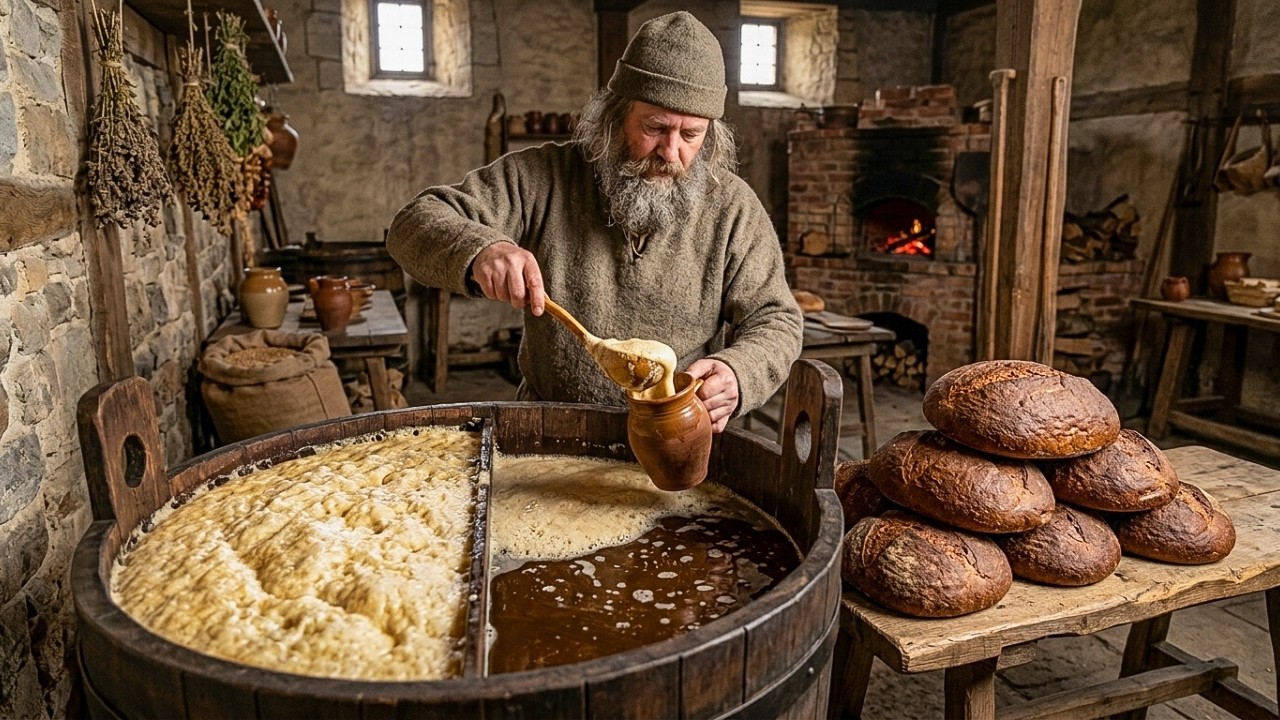
A medieval baker would not call it bread.
Pick up a supermarket loaf and read the label. Emulsifiers, enzymes, added gluten, preservatives, and a shelf life no honest dough could survive. It is engineered to be soft on day one and forgotten by day three.
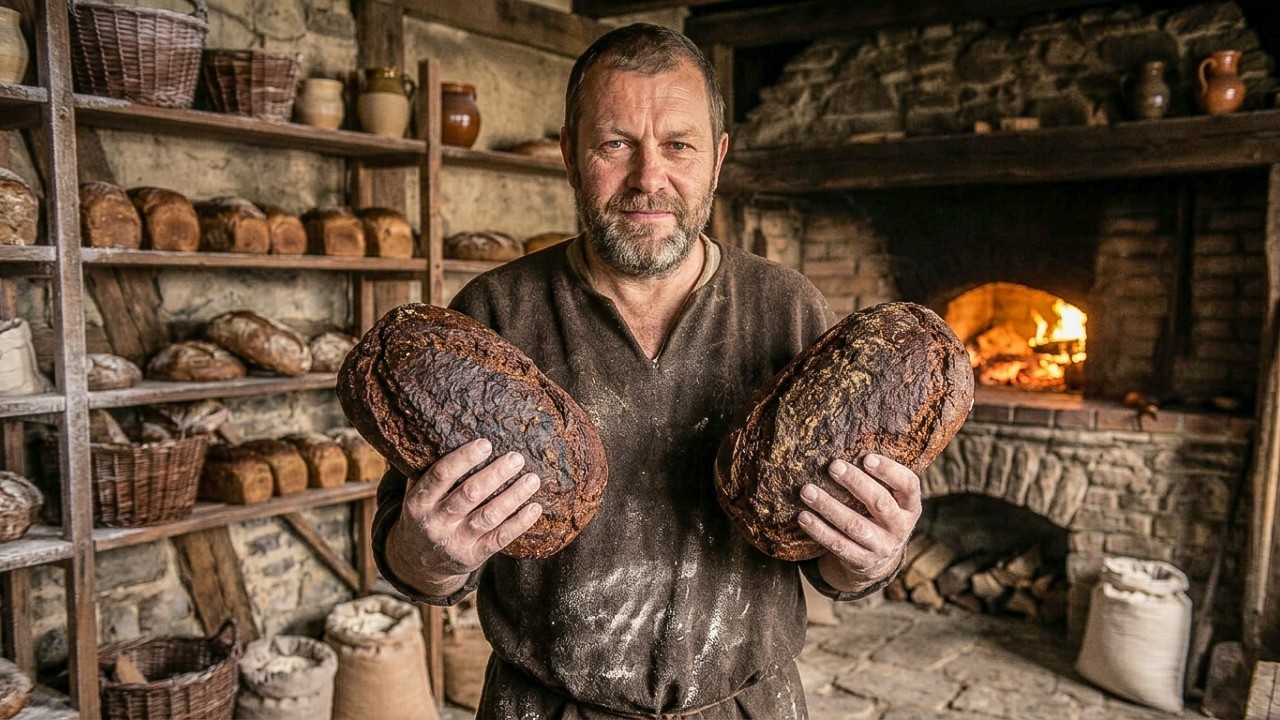
The loaf that fed Europe had four ingredients. Flour, water, salt, and time. It came out of ordinary ovens, made by ordinary people, and it kept for a week because the fermentation did the work that additives do now.
You have watched us bake it on the channel. These books are where watching becomes doing.
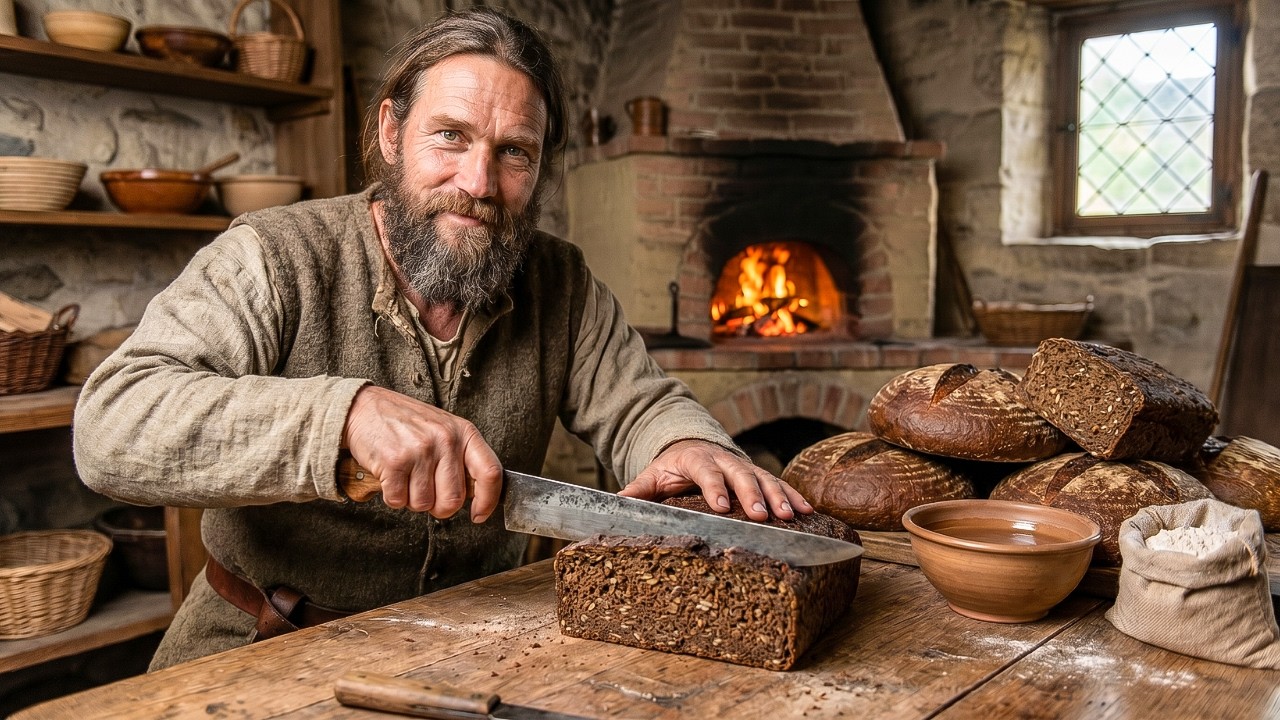
Three books. One body of work.
Step-by-step recipes, each one tested in a real home kitchen before it went to print. Hearth loaves, trencher bread, dense dark ryes. Exact weights, temperatures and timings for a standard oven.
Digital PDF · instant downloadBuild a rye starter from nothing but flour and water, day by day. Then the 48 to 72 hour fermentation protocols that give medieval rye its depth, its keeping quality, and its digestibility.
Digital PDF · instant downloadWhere to find real millers, how to judge flour quality, and how to order heritage grain online. The shortest of the three books. It answers the question we are asked most often, where do I actually get the grain.
Digital PDF · instant downloadBought together, the ledger is simple.
You save $13.00. One payment. No subscription.
Nothing in these pages is guesswork.
The methods are anchored to monastery records, surviving manuscripts and archaeology, and cross-checked against research from the universities of Florence, Hohenheim and Wageningen. Specific grains, specific weights, specific temperatures. Where the historical record is silent, we say so.
And nothing requires special equipment. Every recipe was written for a standard home oven and a kitchen scale. If a step did not survive testing in an ordinary kitchen, it did not make the book.
What came out of their ovens.
I baked pumpernickel from cracked whole grain and the crust browned exactly the way the book said it would. My wife couldn't believe I made it.D. O.
The sourdough rye has a subtle sweetness I did not expect. After the full 48 to 72 hour fermentation I can eat it without any digestive trouble. Thank you for the quality of this resource.A. W.
Through the Sourcing Guide I found a miller and learned the specialty grains I wanted are easy to order online and in health-food shops. I had baked at home before, but never with flour like this.D. O.
We film ourselves doing it.
Medieval Way exists because we wanted to know whether the old methods actually work, not read that they once did. More than one hundred films and eleven million views later, the answer is on the channel for anyone to watch.
These books hold what survived the testing. The recipes that worked, the timings that mattered, and none of the theory that didn't.
Asked and answered.
Is this historically accurate?
Yes. The methods are anchored to monastery records, manuscripts and archaeology, and cross-checked against university research from Florence, Hohenheim and Wageningen. Specific grains, weights and temperatures are documented throughout.
Do I need baking experience?
No. The Sourdough Manual builds your starter from scratch, and every recipe uses gram-precise measurements. There is no guesswork to get wrong.
Do I need special equipment?
A standard home oven and a kitchen scale. Nothing else. Every recipe was tested in an ordinary kitchen before publication.
Where do I get the grain and flour?
Online and in health-food shops, more easily than most people expect. The Sourcing Guide includes a miller directory and shows you how to judge flour quality before you buy.
How is it delivered?
These are digital PDF books, not printed books. The download arrives in your inbox the moment you order, and it reads on your phone, tablet, laptop or e-reader. Want it on paper? You are welcome to print and bind your copy at home.
What if it's not for me?
Try the recipes for a full 14 days. If you are not happy, email bekker@wiss-media.com and we refund every cent. Most messages get a reply within 24 hours.
The collection price ends Sunday.
--:--:--
After that, the three books return to their separate prices, $48.00 in all. The collection is $35.00 today.
Bread is not the only bill.
The bakery is where Medieval Way started, but it is not where the old methods end. The Medieval Home: Savings Manual applies the same approach to the rest of the house. Thirty-five ways to cut your bills the old way. It is new in the shop, and it is not part of this collection.